The Desire Project
Developing a delay-free glucose sensing technology.
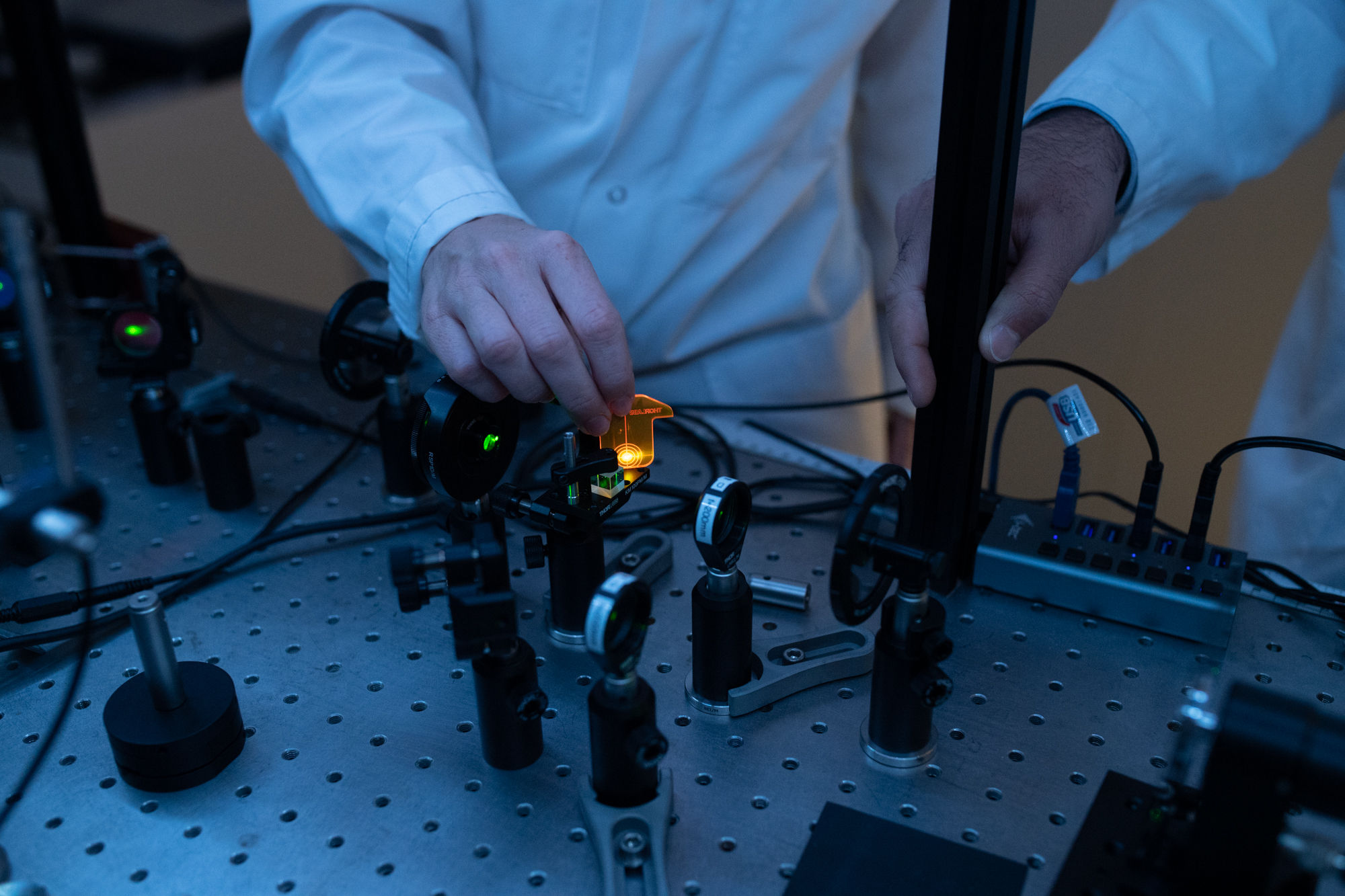
The goal of this research project is to create a new toolset for real-time glucose sensing, which is a crucial step towards the development of an artificial pancreas – a closed-loop system that mimics the function of a healthy pancreas. Continuous glucose monitoring (CGM) is widely used in the management of diabetes and has been shown to improve glucose control and overall health outcomes for people with diabetes. However, current CGM technology has a measurement delay caused by both physiological factors (measurement in the subcutaneous tissue) and technological factors (sensor and filtering algorithms), which can lead to inaccurate readings during times of rapid glucose changes, such as during meals, physical activity, or illness. This can result in inadequate treatment decisions and poor glucose control. The proposed research project aims to address this issue by developing a new optical glucose sensor. The optical technology has the advantage that it does not require direct contact with the analyte (glucose), potentially resulting in more accurate measurements than current sensors.
Nasehi M, Hassanpour E, Bonmarin M, et al. Liquid crystal-based interferometric detection of optical activity for glucose sensing. Proc. SPIE, Polarized Light and Optical Angular Momentum for Biomedical Diagnostics 2026. 2026. doi:10.1117/12.3079140
Hassanpour E, Nasehi M, Meymandinezhad A, et al. A low-power approach to optical glucose sensing via polarisation switching. Scientific Reports. 2025;15(1):14200. doi:10.1038/s41598-025-99367-0
Hassanpour Yesaghi E, Nasehi M, Witthauer L. Polarimetric glucose measurement via digital polarization modulation. Proc. SPIE, Optical Diagnostics and Sensing XXIV: Toward Point-of-Care Diagnostics. 2024. doi:10.1117/12.3000164
Diabetes Center Berne Foundation
Berne University Research Foundation