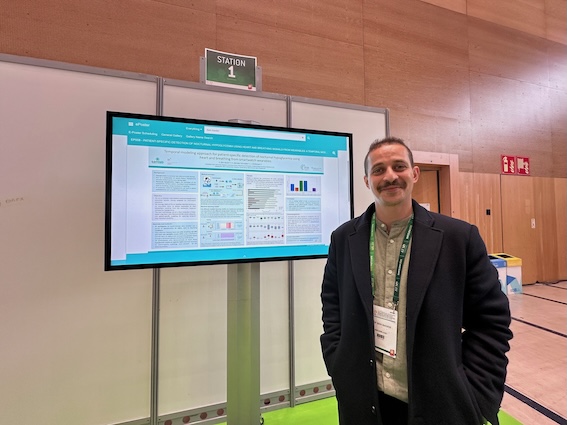
Presentation at ATTD 2026 in Barcelona
We presented our latest work on non-invasive nocturnal hypoglycemia detection using smartwatch data at ATTD 2026 in Barcelona.
At the Advanced Technologies & Treatments for Diabetes (ATTD) 2026 conference in Barcelona, the Sensing and Monitoring Lab presented new results on the detection of nocturnal hypoglycemia using wearable devices (Abstract Nr. 476).
The work, led by Seif Ben Bader, investigates a non-invasive approach based on smartwatch-derived physiological signals, including heart rate, breathing rate, and heart rate variability (HRV) proxies. Using patient-specific temporal modeling with Long Short-Term Memory (LSTM) networks, the method aims to capture individual physiological responses to hypoglycemia during sleep.
Data were collected from 37 participants, with the analysis focusing on a subset of 10 individuals who experienced multiple hypoglycemic events, enabling patient-specific modeling. Within this group, the approach achieved an average AUROC of 0.82. HRV-derived features were the most informative predictors in the majority of participants.
These results highlight the potential of wearable-based, data-driven methods for unobtrusive nocturnal hypoglycemia detection, while also underlining the importance of sufficient event data for individualized modeling approaches.